

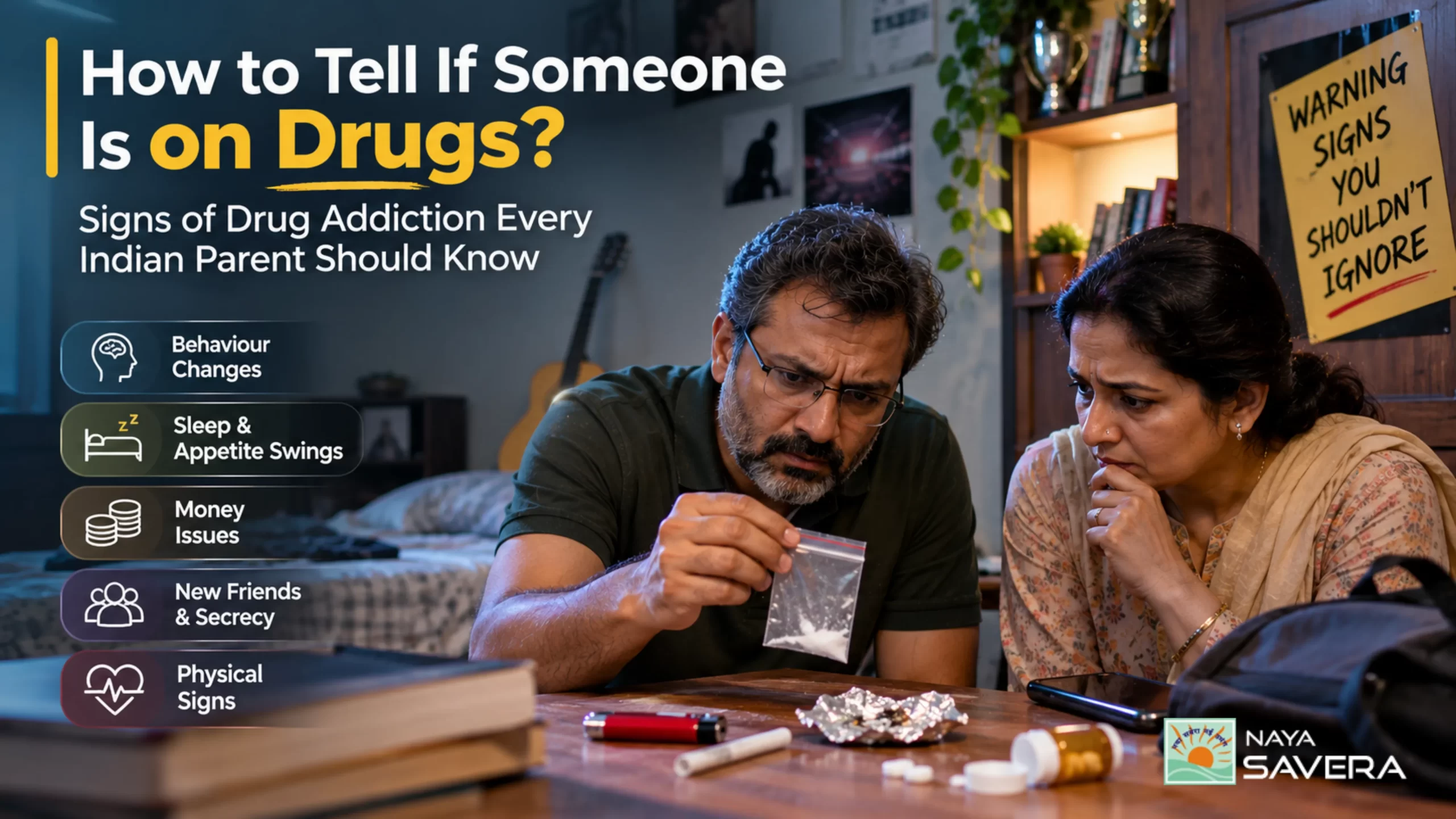

Most parents start searching late at night. A son who used to talk at dinner now eats in his room. A college fees payment went missing. There is a smell in the car nobody can explain. The question goes round and round: is this just a phase, or is he taking drugs?
There is no single sign that proves drug use. But drugs do leave patterns, and once you know how to tell if someone is on drugs, the picture becomes much clearer. Below you will find:
- the general warning signs
- a drug-by-drug breakdown of what to look for
- how to tell normal teenage moodiness from something more serious
- what to do next
Quick Answer
The most common signs of drug addiction are:
- sudden changes in behaviour, friends, sleep and appetite
- money or valuables going missing
- secrecy about the phone and the bedroom
- falling performance at college or work
- physical signs such as red or glassy eyes, very small or very large pupils, and unusual smells
One sign alone means little. Several signs together, lasting weeks, are a reason to act.
General Warning Signs of Drug Use
Whatever the drug, the same signs of drug use tend to appear. Watch for patterns across four areas.
Body and health
- Red, glassy or watery eyes, or pupils that look unusually small or large
- Sudden weight loss or gain, or big changes in appetite
- Sleeping at odd hours, staying up all night, or sleeping through the day
- Frequent sniffing, nosebleeds, sores or marks on the skin
- Poor hygiene and a general rundown look
Behaviour and mood
- Mood swings that seem out of proportion
- Unusual energy and talkativeness, or unusual sleepiness and slowness
- Irritability, anger or paranoia, especially when asked simple questions
- Loss of interest in hobbies, sport, family events and old friends
- A new group of friends you are not allowed to meet
Money
- Constant requests for money with vague reasons
- Cash, gold, phones or electronics disappearing from the house
- Unexplained UPI transfers or borrowing from relatives and friends
Privacy
- Locked doors, a phone that is never put down, deleted messages
- Strong reactions when anyone enters the room or picks up a bag
- Frequent use of eye drops, perfume or mouth fresheners to cover something
Drug-by-Drug: What to Look For
Different drugs cause different effects. This table covers the drugs families in Delhi NCR most often encounter.
| Drug and common names | Signs while using | What you might find |
|---|---|---|
| Cannabis (ganja, charas, weed, maal) | Red eyes, giggling, slow reactions, strong hunger, poor memory, a sweet or skunky smell | Rolling papers, hollowed out cigarettes, chillums, small crushers or grinders, seeds |
| Heroin (smack, brown sugar, chitta) | Tiny pupils, drowsiness, nodding off, constipation, itching; sweating and body ache when not using | Burnt silver foil, lighters, rolled notes, small paper packets, syringes |
| MDMA / ecstasy (Molly, E) | Large pupils, jaw clenching, teeth grinding, sweating, overheating, unusual affection; low mood for days afterwards | Coloured pills with logos, small zip bags, chewing gum or lollipops after parties |
| Mephedrone (MD, meow meow) | Large pupils, racing heart, restlessness, binges lasting hours, anxiety and paranoia | White crystals or powder in small bags, rolled notes |
| Cocaine (coke, charlie) | Large pupils, talkative and overconfident, frequent sniffing, runny nose or nosebleeds | White powder residue, rolled notes, small mirrors or cards |
| Methamphetamine (ice, crystal) | Days without sleep, rapid weight loss, skin picking and sores, tooth damage, paranoia | Glass pipes, foil, clear crystals |
| Pills and syrups (tramadol, sleeping pills, codeine cough syrup) | Drowsiness, slurred speech, confusion, mood changes | Medicine strips, empty syrup bottles, prescriptions from several doctors |
| Inhalants (whitener, glue, petrol), mostly among younger teenagers | Chemical smell on breath or clothes, dizziness, stains around nose or mouth | Correction fluid bottles, glue tubes, cloths or plastic bags with a chemical smell |
A few of these deserve a closer look.
Cannabis is often underestimated by parents. Heavy use in the late teens and early twenties is linked to anxiety, poor concentration and, in some young people, psychosis. The details are in cannabis addiction among college students.
Heroin and smack can cause physical dependence very quickly, and the overdose risk is real. If anything in that row of the table sounds familiar, read the warning signs of smack and heroin addiction.
Party drugs such as MDMA, MD and cocaine are often used only at weekends, so families see the low mood and exhaustion midweek rather than the use itself. Synthetic drugs in Delhi’s nightlife explains how these spread through parties and friend groups.
Pills and syrups hide in plain sight because they come from chemists. The pattern is described in prescription drug misuse in India.
Is It Drugs, or Just Growing Up?
Teenagers and young adults change, which makes drug use in teenagers easy to miss. They want privacy, sleep late, argue more and spend more time with friends than family. None of that, on its own, means drugs. The difference usually lies in three things.
Speed. Normal change happens gradually. Drug use often brings a sudden shift over weeks: new friends, new habits, new secrecy, all at once.
Scale. Everyone has a bad week. Drug use tends to show up across several areas together: sleep, money, studies, mood and health.
Direction. Growing up usually means a young person is moving towards something, such as a career, a relationship or independence. Drug use usually means they are moving away from things they used to care about.
If you see sudden, wide changes that are pulling your child away from his life, trust your instinct and look closer.
Should You Use a Home Drug Test?
Urine drug test kits are sold at chemists and online in India. A home drug test can help, but it has limits.
- Detection windows are short for most drugs. Many drugs show up in urine for only one to four days after use. Cannabis can be detected for longer in regular users, sometimes for weeks.
- Not every drug is tested. Standard panels may not pick up newer synthetic drugs such as mephedrone.
- False results happen. Some medicines can trigger a positive result, and a negative result does not rule out use.
- How you use it matters. A test sprung as a trap often damages trust more than it helps. If you do test, explain why, and ideally involve a doctor.
A professional assessment by a doctor or a drug rehab centre is far more reliable than a home kit, and it looks at the whole person, not just one sample.
You Have Found Drugs. What Now?
Finding a packet, pills or a pipe is frightening. What you do in the next few days matters.
- Do not confront him while he is high. Wait until he is sober and calm.
- Stay calm when you talk. Describe what you found and why you are worried. Avoid labels like “nashedi”.
- Listen more than you speak. Ask how long, how often and why. The answers tell you whether this is experimenting or something deeper.
- Do not make deals you cannot keep. “Promise me it will never happen again” rarely works. Agree on a clear next step instead, such as seeing a counsellor.
- Get an assessment. A professional can judge whether this is early experimentation, regular use or drug addiction.
- Know the emergency signs. If someone cannot be woken, is breathing very slowly, is extremely hot and confused, or has a seizure, call 112 immediately.
If he refuses to accept there is a problem, the steps in how to convince someone to go to rehab work just as well for drugs as for alcohol.
When Does Drug Use Become Addiction?
Not everyone who tries a drug becomes addicted. Doctors look for a pattern. Drug addiction symptoms usually include several of these:
- Using more, or for longer, than intended
- Wanting to cut down but being unable to
- Spending a lot of time getting, using and recovering from the drug
- Strong cravings
- Failing at studies, work or family responsibilities because of use
- Giving up activities and relationships that used to matter
- Using in dangerous situations, such as before driving
- Needing more for the same effect, which is called tolerance
- Feeling ill, anxious or irritable when not using, which is withdrawal
The more of these that apply, the more serious the problem. When withdrawal and tolerance appear, the body has become dependent, and stopping without support becomes much harder.
What Treatment Looks Like
Drug addiction treatment starts with understanding exactly what someone uses and why. It usually moves through these stages:
- A medical assessment
- A medically supervised detox, where withdrawal needs it
- Counselling, group work and family involvement to rebuild the life that drugs took over
Mental health conditions such as anxiety and depression are common alongside drug use and need treatment too.
Recovery takes time. Most people need at least three months of treatment, and many benefit from longer, as set out in how long rehab takes.
Naya Savera and Drug Addiction
Naya Savera has worked with families affected by drug addiction since 2008. We are a non-profit de addiction centre and nasha mukti kendra. Our work blends medical detox and clinical psychiatry with the Narcotics Anonymous 12 Steps, a therapeutic community and regular family counselling, because a young person’s recovery depends heavily on what happens at home.
Our rehabilitation centre in Delhi is in Swaroop Nagar. Families in the south of the city can find details on our rehabilitation centre in South Delhi page. Families in Noida, Greater Noida and Ghaziabad can reach our nasha mukti kendra in Noida.
Frequently Asked Questions
How can I tell if my son is on drugs?
Look for sudden changes across several areas at once: new friends, secrecy, poor sleep, appetite changes, missing money, falling marks, and physical signs like red eyes or unusual pupils. One sign alone is not proof, but a cluster of signs lasting weeks deserves attention.
What are the first signs of drug addiction?
Early signs often include withdrawal from family, mood swings, loss of interest in hobbies, new and secretive friendships, and frequent requests for money. Physical signs depend on the drug.
How long do drugs stay in urine?
For most drugs, one to four days after use. Cannabis can be detected for longer in regular users, sometimes for several weeks. Some newer synthetic drugs are not picked up by standard home kits at all.
What should I do if I find drugs in my child’s room?
Stay calm, wait until he is sober, and talk about what you found without shouting or labelling him. Then arrange an assessment with a doctor or de addiction professional to understand how serious the problem is.
What is the difference between drug use and drug addiction?
Drug use means taking a drug, even occasionally. Addiction means the person keeps using despite harm, struggles to stop, craves the drug, and may feel withdrawal without it. Early use can turn into addiction quickly with drugs like heroin.
Can drug addiction be treated?
Yes. With medical detox, counselling, family support and aftercare, many people recover and rebuild their lives. Like other long-term health conditions, it needs ongoing care, especially in the first year.
Spotting the signs is the hard first step. For the next one, speak to the Naya Savera team on 98732 90300 or write to info@nayasavera.org.
Leave a Comment