

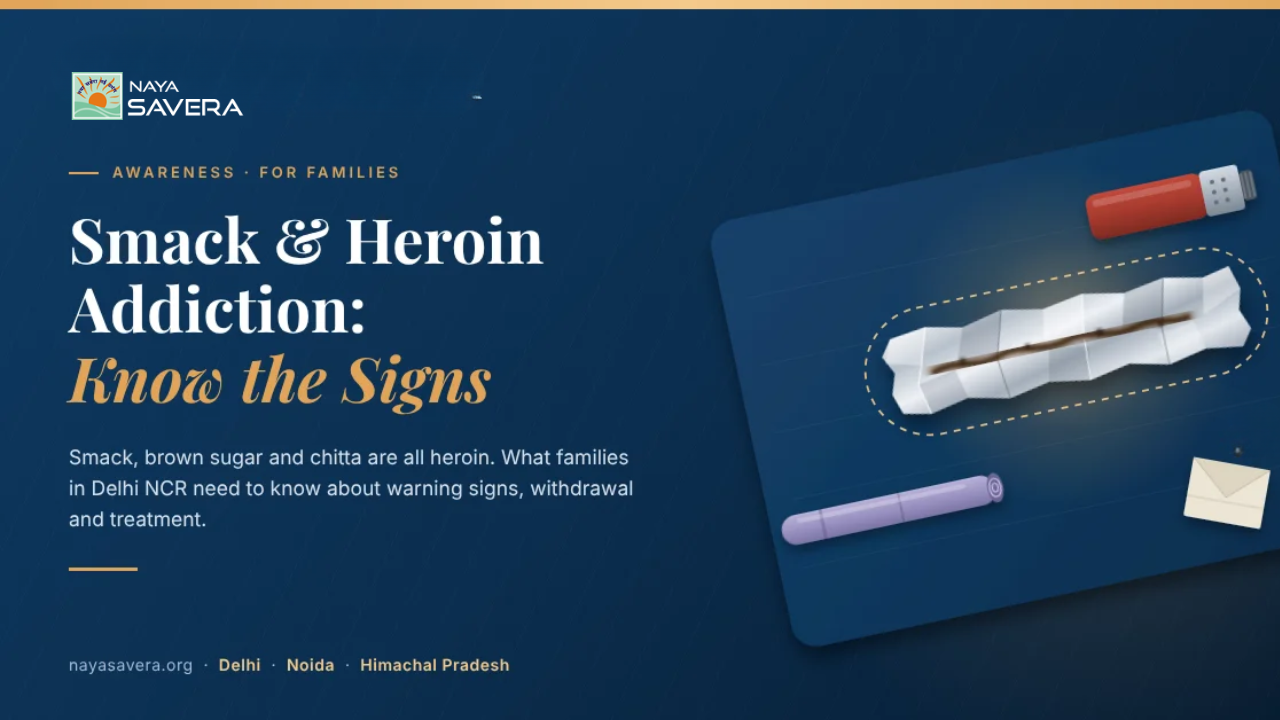

It usually starts with small things that do not add up. A son who spends too long in the bathroom. Burnt pieces of silver foil behind the cupboard. Money missing from a wallet, then a gold chain, then a phone. Days when he is sleepy and unusually calm, followed by days when he is sweating, aching and angry for no reason anyone can see. By the time a family puts a name to it, smack addiction has often been going on for a year or more.
Smack, brown sugar and chitta are street names for heroin, and heroin addiction is one of the hardest drug problems families in North India face. This guide explains what these drugs are, the warning signs to look for, what withdrawal and overdose look like, and how treatment actually works.
What Smack, Brown Sugar and Chitta Really Are
All three are names for heroin, an opioid made from the opium poppy. What is sold on the street is rarely pure. It is cut with other powders, sometimes with medicines, and in recent years sometimes with much stronger synthetic drugs. Nobody buying a packet knows how strong it is, and that uncertainty is a big part of why it is so dangerous. We wrote about one of these newer additives in our piece on the zombie drug threat in Punjab and North India.
Heroin is most often smoked on foil, which users call “chasing”, but it is also snorted and injected. Many young men start by smoking because they believe it is safer, then move to injecting when smoking no longer gives the same effect.
How Big the Problem Is
India’s national survey on substance use, published by the Ministry of Social Justice and Empowerment in 2019, found that about 2.26 crore Indians use opioids, and that heroin has overtaken opium as the most commonly used opioid. Around 77 lakh people were estimated to need help for opioid use problems. Punjab, Haryana and Delhi were among the states with the highest share of people needing that help. Together with Uttar Pradesh and a few other states, they account for more than half of all people with opioid problems in the country.
These are not distant numbers. They are sons, husbands and brothers in ordinary homes across Delhi NCR.
Why Heroin Takes Hold So Fast
Heroin acts on the brain’s opioid receptors, the system that controls pain, pleasure and calm. The first experiences bring deep warmth and relief. Very quickly, the brain adapts. The person needs more for the same effect, and soon the drug is no longer about feeling good at all. It is about not feeling sick.
That is the trap of opioid addiction. Without the drug, the body goes into withdrawal within hours. So the person uses to feel normal, spends more to keep up, and organises the whole day around the next dose. Willpower alone rarely breaks this cycle, because the body itself is pushing back.
Signs of Heroin Addiction Families Should Know
The signs of heroin addiction fall into three groups. One sign on its own proves nothing, but several together deserve attention.
Changes in the body:
- Very small pupils, heavy eyelids, nodding off in the middle of a conversation
- Sudden weight loss, poor appetite and constipation
- Frequent itching and scratching
- Runny nose, yawning, sweating and body ache on days without the drug
- Marks on the arms or legs, and full sleeves even in summer
Changes in behaviour:
- Long stretches in the bathroom or a locked room
- Money, gold, phones and household items going missing
- A constant need for money, with stories that keep changing
- New friends, old friends dropped, and falling interest in work, studies and family
- Mood that swings between unusual calm and sharp irritability
Things found around the house:
- Burnt silver foil, lighters and candles
- Rolled currency notes, straws or empty pen tubes
- Small paper or plastic packets, often called a “puriya”
- Syringes, needles or blackened spoons
Heroin Withdrawal: What to Expect
Heroin withdrawal symptoms usually begin 6 to 12 hours after the last dose, peak over the next two to three days, and ease over about a week. Poor sleep, low mood and cravings can last much longer.
Common symptoms include:
- Strong craving and restlessness
- Runny nose, watering eyes, yawning and sneezing
- Sweating, chills and goosebumps
- Severe muscle and bone pain, and cramps
- Diarrhoea, nausea and vomiting
- Sleeplessness, anxiety and anger
Heroin withdrawal is extremely painful, though in otherwise healthy adults it is less often life threatening than withdrawal from alcohol. The real risks are:
- dehydration
- other health problems
- using alcohol or pills at the same time
- above all, the person giving up halfway and using again
This is why locking someone in a room at home to go “cold turkey” so rarely works. A medically supervised detox keeps the person safe and comfortable enough to get through it, for many of the same reasons we explain in our guide to why detox should be done under medical supervision.
The Overdose Risk Families Must Understand
The most dangerous moment is often just after a period without the drug: after detox, after a stay in rehab, or after a few days in hospital. Tolerance drops quickly. If the person goes back to his old amount, it can be enough to stop his breathing.
Signs of an opioid overdose:
- He cannot be woken, or does not respond to his name or a firm rub on the breastbone
- Breathing is very slow, shallow or has stopped, sometimes with snoring or gurgling sounds
- Lips and fingertips turn blue or grey
- Pupils are tiny, like pinpoints
- Skin is cold and clammy
What to do:
- Call 112 immediately.
- Turn him on his side so he does not choke.
- Stay with him and keep checking his breathing.
- Tell the doctors he may have used heroin, so they can give naloxone, a medicine that reverses opioid overdose.
- Do not waste time with cold water, salt water, milk or slapping him awake.
Injecting Brings Extra Risks
Sharing needles spreads HIV and hepatitis B and C. Injecting also causes abscesses, damaged veins and serious infections. Anyone who has injected, even once, should be tested. HIV testing is available free at government hospitals, and an early diagnosis makes a big difference to treatment.
What Families Should Do, and What to Avoid
Do:
- Talk when he is calm and sober, and describe what you have seen rather than using labels
- Stop handing over cash and pay bills directly instead
- Keep gold, cards and valuables locked away
- Get an assessment from a doctor or a de addiction centre as early as possible
- Find support for yourselves, because living with heroin addiction exhausts the whole family
Avoid:
- Tying him up or locking him in to force withdrawal. It is unsafe and almost never lasts.
- “Nasha chhudane ki dawa” sold online or by unqualified sellers to be mixed secretly into food. Nobody knows what is in these products, and they can be dangerous for someone who has heroin in his body.
- Believing that marriage, a new job or a move to another city will fix it on its own
- Waiting for him to hit “rock bottom”, which for heroin can mean an overdose
Many men refuse help for months or years out of shame and pride. Our piece on why Indian men delay seeking help for addiction explains what sits behind that refusal and how families can respond.
How Smack Addiction Treatment Works
Good smack addiction treatment follows the same broad path as any serious drug addiction treatment, with extra care for the physical side of opioid dependence.
It starts with assessment, which looks at questions like these:
- How much is he using, for how long, and how?
- Is he injecting?
- Is he also drinking or taking pills?
- What is his physical health like?
- Is there depression or anxiety underneath?
Many people with opioid problems also have a mental health condition, and treating both together makes a real difference, as we explain in our guide to dual diagnosis.
Detox comes next, under medical supervision, with medicines to ease the worst of the symptoms where needed. For some patients, a psychiatrist may also prescribe longer term medicines such as buprenorphine or naltrexone, which reduce cravings or block the effect of heroin. These must only be started and managed by a doctor, never bought from a chemist on someone’s advice.
Then comes the real work of recovery, which takes time. Heroin changes how a person thinks, sleeps, handles stress and spends his day, and a few weeks are rarely enough to rebuild all of that. A stay at a residential rehabilitation centre gives distance from dealers, old friends and easy money, along with daily structure. If you want to know what that looks like day to day, read what actually happens in the first 30 days at a rehab centre.
Counselling sits at the centre of rehab. Cognitive behaviour therapy helps the person recognise the thoughts, people and situations that lead to using, and practise other ways to cope with cravings. Narcotics Anonymous and the 12 Steps give him a community of people who have been through the same thing.
Family counselling helps parents and wives rebuild trust, set clear boundaries and learn how to respond to warning signs without fear or blame.
Aftercare matters as much as the stay itself. The first months back home carry the highest risk of relapse and, after a period without heroin, the highest risk of overdose. A written relapse prevention plan, regular follow ups and continued meetings protect that progress. Our piece on why relapse happens after rehab covers what families can do in those first 90 days.
How Naya Savera Helps
Naya Savera is a non-profit nasha mukti kendra registered under the Indian Trust Act, and has worked with families since 2008. We run:
- a rehabilitation centre in Delhi
- a nasha mukti kendra in Noida, near the Noida Greater Noida Expressway
- a centre in Palampur, Himachal Pradesh
Treatment moves from a health assessment and detox to primary care, secondary care and aftercare, with an average stay of about six months. Our programme combines the Narcotics Anonymous 12 Steps and a therapeutic community with clinical psychiatry, Ayurveda and yoga, with 24/7 medical and psychological support. Our counsellors and clinical psychologist provide cognitive behaviour therapy, family and marital therapy and stress management. Families take part through monthly counselling and home visits. Every person leaves with a relapse prevention plan and regular follow ups. You can read more on our approach and accreditation page.
Frequently Asked Questions
Is smack the same as heroin?
Yes. Smack, brown sugar and chitta are all street names for heroin, usually in an impure form cut with other substances. Because its strength varies from packet to packet, the risk of overdose is always present.
What are the signs of heroin addiction?
Common signs include tiny pupils, drowsiness and nodding off, weight loss, and money or valuables going missing. Families may also find burnt foil, lighters, rolled notes or syringes at home. On days without the drug, the person may have a runny nose, sweating, body ache and anger.
How long does heroin withdrawal last?
Physical withdrawal usually starts within 6 to 12 hours of the last dose, peaks in two to three days and settles over about a week. Cravings, poor sleep and low mood can continue for weeks or months, which is why ongoing treatment matters.
Can someone quit smack at home?
A few people manage it, but most relapse because withdrawal is so painful and cravings are so strong. Quitting at home without support also raises the risk of overdose if the person uses again. A medically supervised detox followed by rehab gives a much better chance.
How long does treatment for heroin addiction take?
It depends on the person, but recovery from heroin usually takes months, not weeks. A residential programme of a few months, followed by aftercare, follow ups and peer support, gives the brain and daily life time to heal.
If someone in your family is using smack or chitta, do not wait for an overdose or a police case to act. Reach out to Naya Savera for a confidential conversation about what is happening and the right next step.
Leave a Comment