

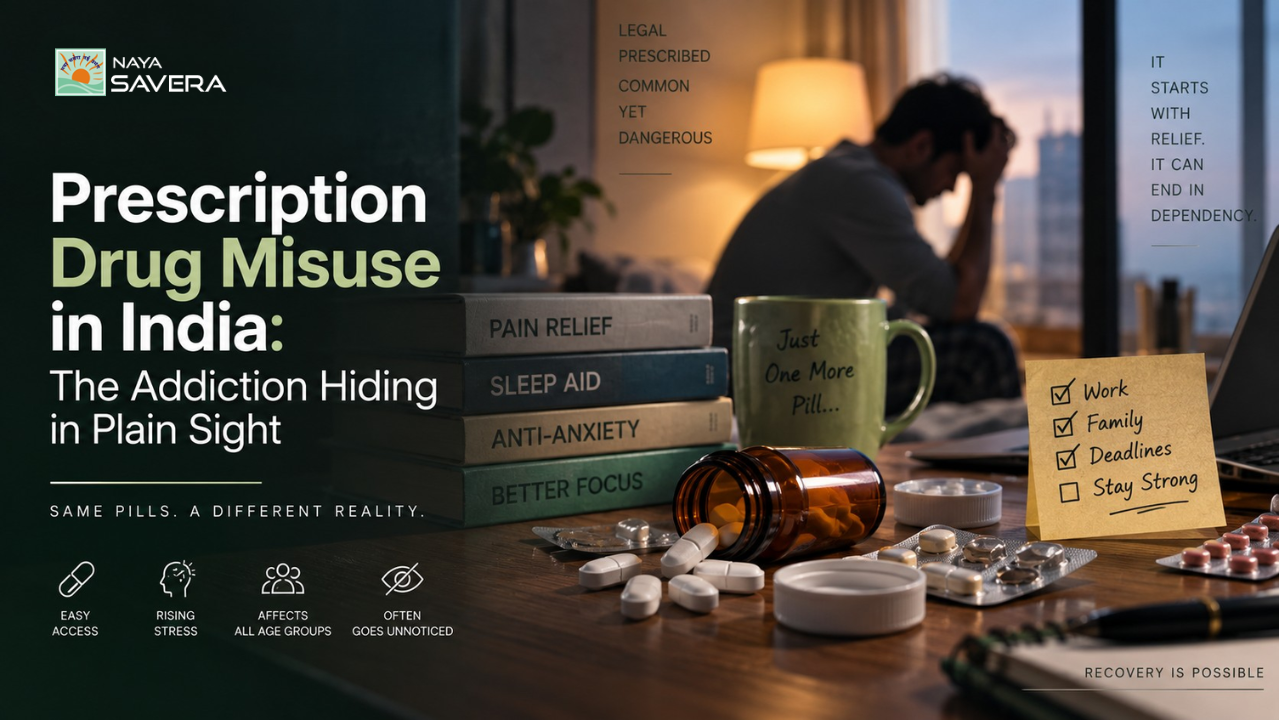

There is a category of addiction that rarely gets discussed openly, mainly because it starts with something completely legal, a doctor’s prescription. No dealer, no street corner, no illegal transaction. Just a strip of tablets sitting in a home medicine cabinet, originally meant to solve one problem, and slowly becoming a dependency nobody in the family saw coming.
Prescription drug misuse, particularly painkillers, sleeping pills and anti anxiety medication, is emerging as one of the fastest growing and least talked about addiction patterns in India today. Unlike illegal substances, which carry an obvious stigma and a clear starting point, prescription drugs enter people’s lives through a doctor’s visit, a pharmacy counter, or a well meaning recommendation from a friend or relative. That legitimacy is exactly what makes the slide into dependency so difficult to notice.
How a Legitimate Prescription Turns Into Dependency
Most cases follow a familiar pattern. Someone is prescribed a sleep aid after a stressful period, or a painkiller following a surgery or injury, or an anti anxiety medication during a genuinely difficult phase of life. The medication works. It provides real relief. And at some point, instead of tapering off as the original problem resolves, the person continues taking it, sometimes because the underlying issue never fully went away, sometimes simply because stopping feels harder than continuing.
Tolerance builds gradually. The original dose stops working as well, and either the person increases it on their own or starts combining it with other substances to achieve the same effect. Because the medication came from a doctor in the first place, it rarely triggers the same alarm that illegal drug use would, not in the person taking it, and often not in the family around them either.
Why This Pattern Is Accelerating in India
A few forces specific to India’s current healthcare and social landscape are driving this trend upward. Access to medication has become significantly easier over the past decade, with online pharmacies, home delivery services and a general culture of self medication reducing the friction between feeling unwell and obtaining a prescription drug, sometimes without the ongoing medical supervision that should accompany it.
At the same time, rising stress across nearly every demographic, students under academic pressure, working professionals managing burnout, elderly individuals dealing with chronic pain or loneliness, has expanded the population turning to these medications in the first place. Mental health stigma remains a significant factor as well. Many people who would benefit from proper therapy or psychiatric care instead seek a quicker fix through medication, often without fully understanding the dependency risk involved.
Doctors and pharmacists, working within an overstretched healthcare system, do not always have the time to closely monitor long term prescriptions, particularly for common categories like sleep aids and anti anxiety medication. This gap in follow up care creates space for dependency to develop quietly over months, sometimes years.
Who Is Most Affected
Prescription drug misuse in India does not follow a single demographic pattern, which is part of what makes it so difficult to address through generic awareness campaigns.
Elderly individuals managing chronic pain from conditions like arthritis frequently develop dependency on painkillers originally prescribed for legitimate medical reasons, often without anyone recognizing it as addiction rather than ongoing treatment. Students facing intense academic pressure, particularly those preparing for competitive examinations, sometimes misuse stimulants or anti anxiety medication to manage stress or extend study hours. Working professionals dealing with chronic sleep issues linked to demanding jobs often rely increasingly on sleep aids, moving from occasional use to nightly dependency. New mothers and individuals managing chronic health conditions represent another vulnerable group, sometimes continuing medication well beyond what was medically necessary simply because stopping feels destabilizing.
Why Families Often Miss the Signs
Because the substance involved is a legitimate medication, family members frequently miss or dismiss early warning signs. A parent taking sleeping pills every night is often seen as managing a health condition rather than developing a dependency. A student relying on anti anxiety medication during exam season is viewed as coping with normal academic stress. This framing, medication as management rather than addiction, delays recognition and treatment far longer than it would with an illegal substance.
Warning signs worth paying attention to include needing a higher dose than originally prescribed to achieve the same effect, visiting multiple doctors to obtain repeat prescriptions, experiencing anxiety or physical discomfort when the medication is not available, and continuing to take the medication long after the original medical reason has resolved. Combining prescription medication with alcohol is another significant red flag, since this combination substantially increases health risks.
Why Treating This Requires a Different Approach
Prescription drug dependency often needs to be approached differently from illegal substance addiction, both medically and emotionally. Withdrawal from certain categories, particularly benzodiazepines commonly prescribed for anxiety, can be medically serious and should never be attempted without professional supervision. Abruptly stopping these medications without a proper tapering plan can lead to severe complications, which is precisely why self directed attempts to quit often fail or become dangerous.
There is also an emotional complexity unique to this pattern. Patients frequently do not see themselves as addicts, since their substance use began through entirely legitimate medical channels. Treatment needs to address this specific psychological barrier directly, helping patients understand dependency as a medical reality rather than a moral failing, while also identifying and treating whatever underlying issue, chronic pain, anxiety, insomnia, originally led to the prescription in the first place.
Effective treatment combines medically supervised tapering and detox, individual counselling that addresses the root cause rather than just the medication itself, and often coordination with the patient’s original prescribing doctor to ensure continuity of care. Naya Savera has worked with this exact pattern extensively, including among corporate professionals in Gurugram managing chronic stress related sleep dependency, and elderly patients across Delhi NCR whose prescription use quietly escalated over years of managing chronic pain.
What Families Can Do
If you suspect a loved one has developed a dependency on prescription medication, the most important first step is avoiding direct confrontation or accusation, which often triggers defensiveness given that the medication was, at some point, entirely legitimate. A calmer approach involves expressing genuine concern about their wellbeing and gently raising the topic of speaking with a doctor about the current dosage and duration of use.
Never encourage or support an abrupt stop to the medication without medical guidance, since this can be genuinely dangerous depending on the substance involved. Instead, professional support that can manage a safe tapering process alongside counselling for the underlying issue offers a far more sustainable path to recovery.
Frequently Asked Questions
How is prescription drug addiction different from illegal drug addiction?
The core physical dependency can be equally serious, but prescription drug addiction often begins through legitimate medical use, which makes it harder for both the individual and their family to recognize as addiction rather than ongoing treatment.
Which prescription medications carry the highest risk of dependency?
Benzodiazepines prescribed for anxiety, opioid painkillers, and certain sleep medications carry particularly high dependency risk, especially when used beyond the originally prescribed duration.
Is it dangerous to stop prescription medication suddenly?
Yes, for several categories, particularly benzodiazepines and opioid painkillers, abrupt discontinuation can cause serious withdrawal complications. Any reduction or discontinuation should happen under medical supervision.
Can someone be addicted to a medication a doctor originally prescribed?
Yes. Addiction is defined by the pattern of dependency and continued use despite negative consequences, not by whether the substance was originally obtained legally or illegally.
What is the first step for a family that suspects prescription drug dependency in a loved one?
A calm, non confrontational conversation focused on genuine concern, followed by professional consultation, is generally more effective than direct accusation, which can increase defensiveness given the medication’s legitimate origin.
A Pattern That Deserves More Attention
Prescription drug misuse continues to expand quietly across India precisely because it does not fit the image most people associate with addiction. There is no illegal transaction, no obvious stigma attached to the substance itself, and often a genuine medical reason behind how it started. Recognizing this pattern as a real, treatable form of addiction, rather than simply ongoing medical management, is the first step toward addressing it properly.
If this pattern feels familiar in your own family, reaching out for a confidential conversation with a professional treatment provider is a reasonable and responsible next step. Naya Savera has supported individuals and families across Delhi, Noida and the wider NCR region since 2008, offering medically supervised treatment for exactly this kind of dependency, without judgment about how it started.
Leave a Comment