


“Kitne din lagenge?” It is almost always the first question a family asks when they call a rehab centre. There is a wedding in the family next month. His office has given him two weeks of leave. Exams start in March. Relatives are already asking where he has gone. Families want him well, but they also want him home, and quickly.
It is a fair question, and it deserves an honest answer rather than a sales pitch. This guide explains how long rehab takes, why a short stay so often fails, what happens at each stage of treatment, and how to decide what is right for the person you love.
The Short Answer
There is no fixed number of days that works for everyone. But the research is clear on two points.
First, detox is not treatment. Getting alcohol or drugs out of the body usually takes from a few days to two weeks. The US National Institute on Drug Abuse describes medically assisted detox as “only the first stage of addiction treatment”, and notes that detox alone rarely leads to lasting recovery.
Second, time matters. The same institute’s principles of effective treatment state that most people with addiction “need at least 3 months in treatment” to significantly reduce or stop their use. They add that “the best outcomes occur with longer durations of treatment.”
So when families ask whether 15 or 30 days will be enough, the answer for most people is no. For many, a rehab duration of three to six months, followed by structured aftercare, gives recovery a real chance. This is why most serious programmes are planned as long term rehab rather than a quick fix.
Why 15 or 30 Days Is Rarely Enough
Addiction is built over years. Every evening drink, every hit, every time the substance was used to handle stress, boredom, anger or sadness, strengthened a habit in the brain. Undoing that takes more than a few weeks. There are three main reasons a short stay falls short.
The brain needs time to heal. Sleep, mood, concentration and the ability to feel pleasure without a substance return slowly. In the first weeks, many people feel flat, irritable and restless. If they leave during this period, they go home at their most vulnerable.
New skills need practice. Counselling teaches a person to recognise triggers and manage cravings, but knowing something is not the same as being able to do it under pressure. A longer stay gives time to practise those skills again and again, in a safe setting, before facing real life.
Underlying problems take time to surface. Depression, anxiety, trauma, grief and family conflict often lie underneath the drinking or drug use, and they rarely come out in the first fortnight. Our guide to dual diagnosis explains why these need treatment alongside the addiction.
30 Days, 90 Days or Longer: Comparing the Options
Families often hear about programmes of different lengths. Here is what each can realistically achieve.
- 30 day rehab is usually enough to complete detox, stabilise physical health and begin counselling. On its own, it is rarely enough for lasting change, and it works only if followed by strong aftercare.
- 90 day rehab matches the minimum that research suggests most people need. It covers detox, the core counselling work and enough time to start building new habits and routines.
- Six months or more allows time for deeper work, family repair and a gradual, supported return to everyday life. It suits people with long histories of use, opioid addiction, previous relapses or mental health conditions.
The right choice depends on the assessment, not on the calendar.
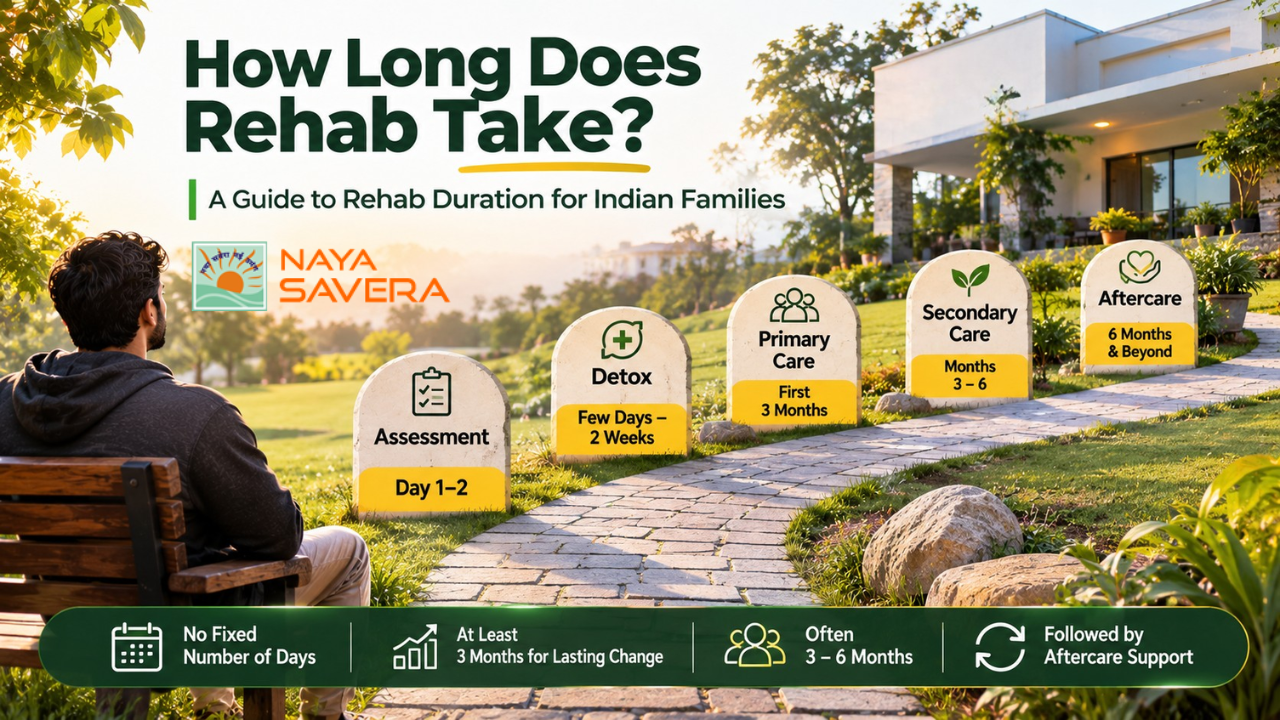
The Stages of Rehab and How Long Each Takes
Good rehab is not one long stretch of the same routine. It moves through stages, each with its own purpose.
Assessment: the first day or two
When someone arrives at a rehabilitation centre, a doctor and counsellor look at:
- what the person uses, how much and for how long
- their physical and mental health
- their family circumstances
This shapes the whole plan.
Detox: a few days to two weeks
A medically supervised detox manages withdrawal safely. How long it takes depends on the substance:
- Alcohol: the most intense symptoms usually pass within a week.
- Heroin and other opioids: physical withdrawal settles over about a week.
- Sleeping pills and anxiety medicines: withdrawal can take longer, and the dose must be tapered carefully.
Our guides to alcohol detox under medical supervision and smack and heroin addiction explain what this phase involves.
Primary care: roughly the first three months
Primary care is where the core work happens. The person settles into a daily routine, attends individual and group counselling, begins working the 12 Steps, and starts to understand why they used. If you want a picture of the early weeks, read what actually happens in the first 30 days at a rehab centre.
Secondary care: roughly months three to six
In secondary care, the person takes on more responsibility, works on deeper issues, rebuilds relationships through family sessions, and prepares for life outside. This stage is often skipped when families push for early discharge, and it is the stage that protects against relapse.
Aftercare: six months to a year and beyond
In aftercare, recovery continues after the stay ends, through follow ups, regular counselling, AA or NA meetings, and sometimes a period in a halfway home. Our guide to how the 12 Steps work explains why meetings matter so much in this phase.
These timelines are a guide, not a rule. Some people move faster and some need longer.
What Decides How Long Someone Needs
Every person is different, but these factors usually point towards a longer stay:
- Many years of heavy drinking or drug use
- Heroin, smack, injecting drug use or the use of several substances together
- Previous attempts at rehab followed by relapse
- Depression, anxiety, bipolar disorder or other mental health conditions
- Serious physical health problems, such as liver damage
- A home environment where drugs or alcohol are easy to get, or where conflict is high
- Friends, colleagues or a neighbourhood closely tied to the using
A person with a shorter history, strong family support and no other health problems may do well with a shorter residential stay followed by close aftercare. A good team will recommend a duration based on the assessment, not on a fixed package.
“But He Looks Fine Now”: The Danger of Leaving Early
This is the moment that undoes many recoveries. Around three to five weeks into treatment, the person often looks transformed. He is eating well, sleeping, clear eyed and full of promises. He begs to come home. The family, relieved and missing him, agrees.
Counsellors sometimes call this the “pink cloud”: a burst of optimism in early recovery that feels like a cure but is not. Many people also go through what is often called post-acute withdrawal. This is a period of weeks or months after detox when poor sleep, irritability, low mood, poor concentration and sudden cravings come and go in waves. A person who goes home before learning to handle these waves is at high risk of using again.
To avoid this trap:
- Agree on the expected length of stay with the treatment team before admission, and keep to it
- Never decide on early discharge during an emotional family visit
- Talk to the counsellors before agreeing to anything the person asks for
- Remember that feeling better is not the same as being ready
Our piece on why relapse happens after rehab explains what the first 90 days at home look like and how families can help.
Halfway Homes and Step-Down Care
For many people, going straight from a structured residential rehab back to the old home, old friends and old pressures is too big a jump. A halfway home, sometimes called a sober living home, sits between the two. Residents live in a substance free house and follow house rules. They go out to work or study and attend meetings and counselling, while gradually rebuilding an independent life.
A halfway home is especially useful for people who:
- have relapsed after previous treatment
- have no safe home to return to yet
- need a gradual return to work
Practical Worries: Work, Studies and What People Will Say
Families often hesitate because a longer stay feels like a long gap in someone’s life. It helps to look at it differently.
Work. Many employers grant medical leave, and you do not need to share every detail with them. A few months away is far easier to explain than repeated absences, poor performance or losing the job altogether.
Studies. A missed semester can be recovered. A student who returns sober, with clear goals, often does better than one who scraped through while using.
Family events. There will always be another wedding, festival or exam. Planning treatment around them is how many families end up delaying it for years.
What people will say. Rehab is confidential. Relatives do not need to know more than you choose to tell them. If you are still trying to persuade someone to agree to treatment at all, our guide on how to convince someone to go to rehab may help.
How Naya Savera Structures Treatment
Naya Savera is a non-profit nasha mukti kendra and de addiction centre, registered under the Indian Trust Act and working with families since 2008. Our treatment follows the stages described above: health assessment, detox, primary care, secondary care and aftercare. The average stay is about six months, and the actual length is guided by each person’s needs.
Our programme combines the Narcotics Anonymous 12 Steps and a therapeutic community with clinical psychiatry, Ayurveda and yoga, with 24/7 medical and psychological support. Our counsellors and clinical psychologist provide cognitive behaviour therapy, family and marital therapy and stress management. Families take part through monthly family counselling and home visits.
Every person leaves with a relapse prevention plan and regular follow ups. We also run a halfway home in Greater Noida for those who need a gradual return to everyday life. Our centres include:
- a rehabilitation centre in Delhi
- a nasha mukti kendra in Noida
- a centre in Palampur, Himachal Pradesh
Frequently Asked Questions
How long does rehab take?
It depends on the person. According to the US National Institute on Drug Abuse, most people need at least three months of treatment to significantly reduce or stop their drug or alcohol use. Many benefit from three to six months of residential treatment followed by aftercare.
Is 30 days of rehab enough?
For most people, no. Thirty days is usually enough to complete detox and begin counselling, but not enough to heal, practise new coping skills and address underlying problems. Longer treatment is linked to better outcomes.
How long does detox take?
Detox usually takes from a few days to two weeks. The most intense alcohol withdrawal symptoms usually pass within a week, and physical heroin withdrawal settles in about a week. Withdrawal from sleeping pills and anxiety medicines can take longer and needs careful medical tapering.
Should we bring him home early if he seems better?
Not without speaking to the treatment team. Feeling better after a few weeks is common and does not mean someone is ready. Leaving before completing treatment is a common reason for relapse.
What happens after rehab ends?
Recovery continues through aftercare: follow up sessions, regular AA or NA meetings, family support and a relapse prevention plan. Some people also spend time in a halfway home before returning fully to everyday life.
If you are trying to work out how long treatment might take for someone you love, reach out to Naya Savera for a confidential conversation. We will explain what we see in the assessment and what we recommend, so you can plan with clear expectations.
Leave a Comment