

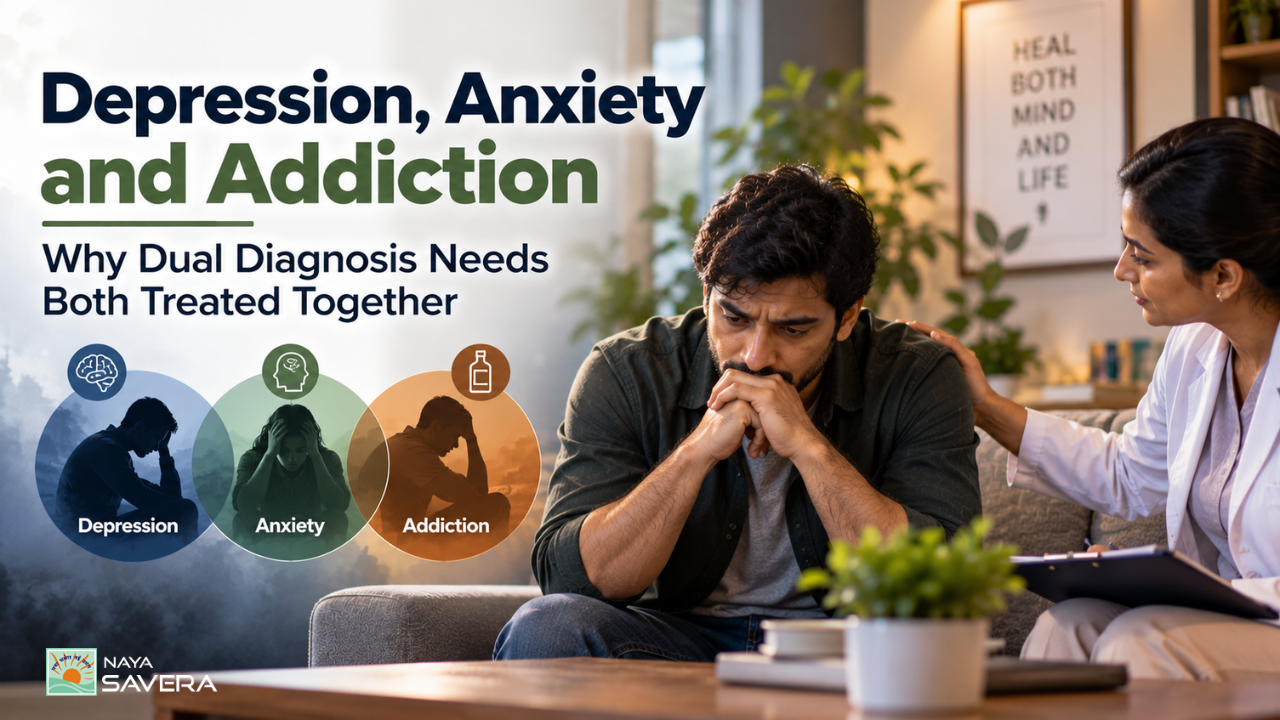

The story families tell us often starts the same way. “He was always a bit low, a bit anxious, but he managed.” Then came a drink to sleep, a few pills to calm the nerves before a meeting, a joint to switch the mind off at night. A year or two later the family is facing two problems at once: the drinking or drug use that everyone can see, and the sadness, panic or anger underneath it that nobody quite knows how to name.
Doctors call this dual diagnosis: an addiction and a mental health condition in the same person, at the same time. It is far more common than most families realise, and it is one of the main reasons people go through rehab, stay sober for a few months and then fall back. This guide explains how depression and addiction feed each other, the warning signs families miss, why treating only one half of the problem so often fails, and what proper treatment for both looks like.
What Dual Diagnosis Actually Means
Dual diagnosis, also called co-occurring disorders, simply means that a substance use disorder and a mental health condition exist together. The addiction might be to alcohol, cannabis, smack, sleeping pills or stimulants. The mental health condition might be depression, an anxiety disorder, bipolar disorder, post traumatic stress, ADHD or, less often, a psychotic illness.
The US National Institute on Drug Abuse estimates that roughly half of people who experience a mental illness will also develop a substance use disorder at some point in their lives, and the reverse is equally true. In practice, counsellors in any rehabilitation centre will tell you the same thing: the person who uses alcohol or drugs for fun is less common than the person who uses them to cope.
Which Came First?
Families often want to know whether the drinking caused the depression or the depression caused the drinking. The answer is usually some of both, and the order matters less than it seems.
Sometimes the mental health problem comes first. A young man with untreated anxiety discovers that two drinks make a party bearable. A father carrying years of low mood finds that a quarter bottle in the evening makes the house feel quieter. This is often called self-medication, and it works just well enough, for just long enough, to become a habit.
Sometimes the substance comes first. Heavy drinking is itself a cause of depression, because alcohol is a depressant that disrupts sleep, mood and judgement. Regular cannabis use can bring on anxiety and, in vulnerable young people, paranoia. Stimulants and party drugs leave people flat, irritable and suspicious in the days after use. Withdrawal from almost any substance produces anxiety, restlessness and despair.
And very often the two share the same roots: family history, childhood trauma, chronic stress, loneliness, a loss that was never grieved. The point for families is this. Once both are present, they keep each other going, and neither improves for long unless both are addressed.
Common Pairings Families See
Alcohol and depression is the most common combination of all. The drinking starts as relief from low mood and ends up deepening it, especially in the mornings. Alcohol and anxiety follow a similar loop: drink calms the nerves at night, withdrawal makes them worse the next day, and more drink is needed to feel normal. We described how this plays out among office workers in our piece on high functioning alcohol addiction among working professionals.
Cannabis and anxiety, or cannabis and psychosis, is the pattern we see most in students and young adults. Heavy use of high potency charas or ganja can trigger panic, paranoid thinking and, in some people, a psychotic episode. We covered this in detail in our guide to cannabis addiction among college students.
Sleeping pills, anxiety medicines and anxiety disorders form another loop. A pill prescribed for a few weeks of stress becomes a nightly need, and stopping it brings back worse anxiety than before. Our article on prescription drug misuse in India explains why this is so easy to miss.
Smack, heroin and other opioids are frequently tied to trauma and long standing depression. The drug numbs pain of every kind, which is precisely why stopping it feels unbearable without support.
Warning Signs That Something More Is Going On
Because the addiction is visible, families often put every problem down to it. These signs suggest there may be a mental health condition underneath that needs its own assessment:
- Low mood, hopelessness or loss of interest that continues for weeks after the person has stopped using
- Panic attacks, constant worry or social fear that started before the drinking or drug use
- Talking about being a burden, not wanting to live, or giving away belongings
- Extreme mood swings, days without sleep, racing speech or reckless spending
- Hearing or seeing things others do not, or fixed suspicious beliefs
- Repeated relapses that happen at the same emotional moments, such as after conflict, loss or loneliness
- A family history of depression, bipolar disorder or suicide
None of these is a diagnosis on its own. Together, they are a reason to make sure the person sees a psychiatrist as part of treatment, not as an afterthought.
Why Treating Only One Half Fails
This is the most important point in this guide. When only one condition is treated, the untreated one usually pulls the person back.
A person who goes through rehab for alcohol, but whose depression is never assessed, often comes home sober and miserable. The drinking was the only relief they knew. Without a new way to manage the low mood, the first bad week becomes the first drink. We explain the wider pattern in our piece on why relapse happens after rehab.
The opposite also happens. A person sees a doctor for depression or anxiety, receives medication, but continues drinking or using every evening. Alcohol and drugs interfere with how many psychiatric medicines work, and they keep driving the low mood the medicine is trying to lift. The family concludes the treatment does not work, when in fact it never had a fair chance.
This is why good practice, in India and internationally, is integrated treatment: both conditions assessed and treated together, by people who talk to each other, in the same plan.
What Integrated Treatment Looks Like
It begins with a safe detox. For heavy drinkers or long term pill users, stopping suddenly can be dangerous, and withdrawal itself can look like severe depression or anxiety. We explained why in our guide to alcohol detox under medical supervision.
Next comes careful assessment, usually after the person has been substance free for some time. Many symptoms that look like depression lift within a few weeks of stopping alcohol. Symptoms that remain, or that were clearly present before the drinking began, point to a condition that needs its own treatment. A good team watches this period closely rather than labelling the person on day two.
Then the two tracks run together. A psychiatrist reviews mood, anxiety and sleep, and decides whether medication is needed and which medicines are safe for someone in recovery. Counsellors and psychologists work on both conditions in the same sessions, using approaches such as cognitive behaviour therapy to help the person notice the thoughts and feelings that used to send them towards a drink or a drug, and to build other ways of coping. Daily structure, exercise, sleep, meditation and group work help mood as much as they help sobriety.
Families are part of it. Living with someone who has both depression and an addiction is exhausting, and families often swing between anger at the drinking and guilt about the sadness. Family counselling helps them understand which behaviour comes from which condition, and how to respond to each.
Finally, aftercare has to cover both. A relapse prevention plan for someone with dual diagnosis includes mood warning signs as well as drinking triggers, regular psychiatric follow up, and a clear plan for what to do on a bad day. What the first month of that structure looks like is described in our guide to the first 30 days at a rehab centre.
A Word on Safety
People living with both depression and addiction are at higher risk of suicide than people with either condition alone. Alcohol and drugs lower inhibition, and the low that follows heavy use can be intense. Families should take any talk of not wanting to live seriously, even if it is said while drunk or in anger.
If you are worried about someone’s safety right now, stay with them, remove alcohol, pills and anything they could use to harm themselves from easy reach, and get help. In India you can call Tele-MANAS, the government’s free mental health helpline, on 14416 or 1-800-891-4416, and in an emergency call 112 or go to the nearest hospital. You do not have to be sure before you call.
What Families Can Do This Week
Write down what you have noticed: when the low moods or panic started, whether they were there before the drinking or drug use, and what happens on the days the person does not use. This history is valuable to any doctor or counsellor.
Avoid choosing sides between the two problems. “He only drinks because he is depressed” and “he is only depressed because he drinks” are both half truths, and either one can delay treatment.
Do not stop any prescribed psychiatric medicine on your own, and do not give extra pills to calm someone down. Ask a doctor.
And when you look for help, ask directly whether the centre can assess and treat mental health conditions alongside the addiction, and how. A centre that treats only the substance, or a clinic that treats only the mood, is offering half a plan.
How Naya Savera Treats Both Together
Naya Savera is a non-profit de addiction centre and nasha mukti kendra, registered under the Indian Trust Act and working with families since 2008, with centres in Delhi, Noida and Himachal Pradesh. Dual diagnosis treatment and mental health conditions are part of what we treat, alongside alcohol and drug addiction. Our approach blends clinical psychiatry with structured rehabilitation, yoga and meditation, with 24/7 medical and psychological support, and counselling from our counsellors and clinical psychologist that covers motivation, emotional problems, cognitive behaviour therapy, family and marital issues and stress management. Families take part through regular counselling sessions, and every person leaves with a relapse prevention plan made for their own circumstances. You can read more about how we work on our approach and accreditation page.
Frequently Asked Questions
What is dual diagnosis in addiction?
Dual diagnosis means a person has an addiction to alcohol or drugs and a mental health condition, such as depression, anxiety or bipolar disorder, at the same time. Each condition tends to make the other worse, so both need to be assessed and treated together.
Can alcohol cause depression?
Yes. Alcohol is a depressant, and heavy regular drinking disrupts sleep, mood and judgement. Many people find that low mood improves within a few weeks of stopping. If depression continues after that, or was present before the drinking began, it needs its own treatment.
Why do people with depression relapse after rehab?
If the depression or anxiety behind the drinking is never treated, the person comes home sober but still struggling, and alcohol or drugs are the only relief they know. Integrated treatment and aftercare that include mood warning signs reduce this risk.
Should someone in recovery take medicines for depression or anxiety?
Some people need them and some do not. The decision should be made by a psychiatrist who knows about the addiction, because some medicines carry their own risk of dependence and others are safe and helpful in recovery. Never start or stop such medicines without medical advice.
How do I know if my family member needs dual diagnosis treatment?
Watch for low mood, panic or hopelessness that continues after they stop using, mental health symptoms that started before the drinking or drug use, extreme mood swings, or relapses that follow the same emotional triggers. Any of these is a reason to ask for a psychiatric assessment during treatment.
If you see both the addiction and the struggle underneath it in someone you love, you are not imagining things, and you do not have to choose which one to treat first. Reach out to Naya Savera for a confidential conversation about how we can help with both, together.
1 Comment