

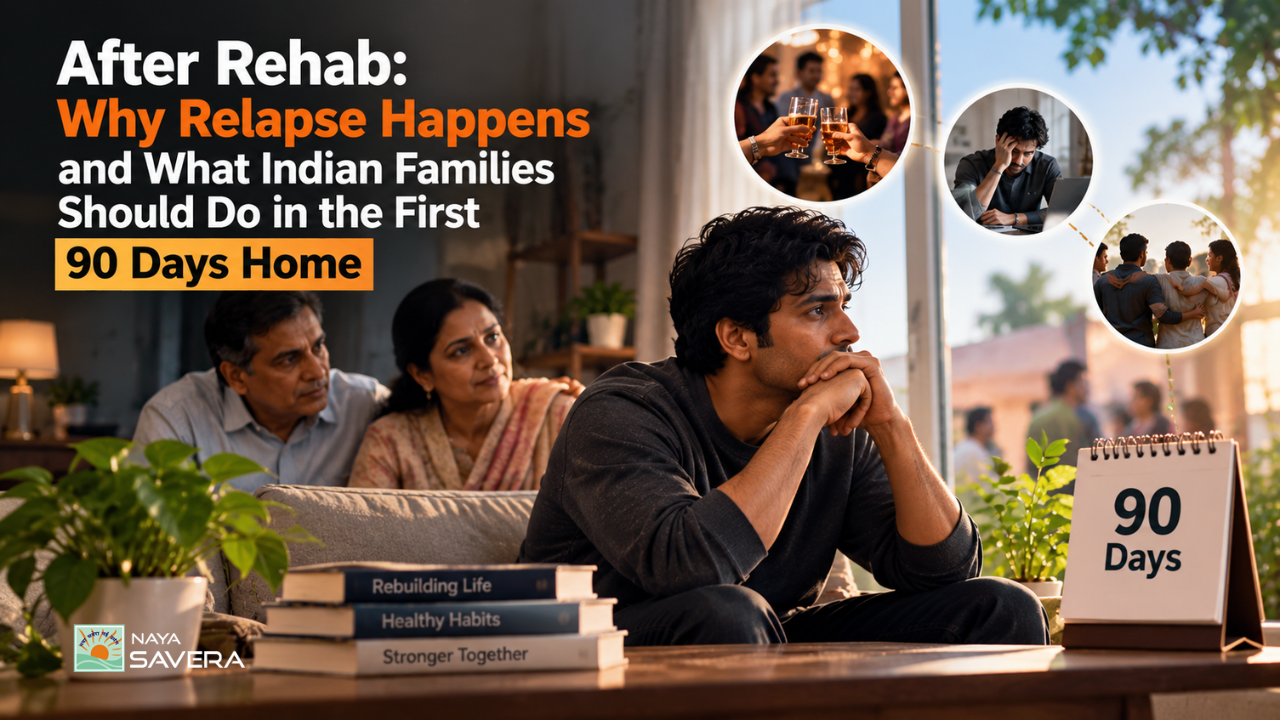

Discharge day feels like the finish line. The family drives home from the centre, there is a special dinner, relatives call to say how proud they are, and everyone quietly agrees never to mention the last two years again. Then, somewhere between the third week and the third month, something slips. A late night out. A bottle found behind the water tank. A phone call from an old friend that was not supposed to happen. The family is blindsided, the person is ashamed, and both sides conclude that treatment “did not work.”
It did work. What happened next is the most predictable part of recovery, and it is the part almost nobody prepares families for. This guide covers why relapse after rehab happens, why the first 90 days at home are the highest risk window, what Indian families specifically get wrong, and what to do instead.
Relapse Is Common, and It Is Not the End
Research has consistently found that relapse rates for addiction sit in the range of 40 to 60 percent, according to the US National Institute on Drug Abuse. That is roughly the same as the rates for other chronic conditions like high blood pressure and asthma when patients stop following their treatment plan. Nobody says a diabetic’s treatment “failed” because their sugar spiked after a wedding. They adjust the plan and continue.
Addiction works the same way. The brain changes that drive it take months to settle, well beyond any residential stay. A slip in that period is information about what still needs work, not proof that the person is hopeless or that the money was wasted. Families who understand this respond faster and calmer, and their relatives recover better.
Relapse Is a Process, Not a Single Bad Night
The actual drink or dose is the last step in a chain that usually starts weeks earlier. Counsellors describe three stages of relapse, and families who learn them can intervene long before the final one.
Emotional relapse comes first. The person is not thinking about using, but their behaviour is setting it up: skipping meals, sleeping badly, bottling up anger, isolating from the family, dropping the routines they built at the centre, not attending follow up sessions. If you ask how they are, the answer is “fine.”
Mental relapse follows. Now there is a tug of war inside. Part of the person wants to stay clean and part is remembering the good times, minimising the bad ones, planning a trip to the old neighbourhood, wondering whether one drink at the cousin’s wedding would really matter. Lying starts here, usually small.
Physical relapse is the act itself. By this stage the decision has effectively been made days earlier.
The practical point for families: watch for the first stage. Isolation, broken routine and “fine” are the warning lights. The bottle is the crash.
Why the First 90 Days Are the Danger Zone
Three things overlap in the first three months home, and together they explain why so many relapses cluster here.
The brain is still healing. Weeks after detox, many people experience what clinicians call post acute withdrawal: waves of low mood, anxiety, irritability, poor sleep and foggy concentration that come and go without obvious cause. The person feels worse than they expected to feel now that they are “better,” and the substance is the fastest fix they know.
The environment has not changed. Inside the centre, every cue for using was removed. At home, the same bar cabinet, the same chemist, the same friends, the same balcony where the evening drink used to happen, are all exactly where they were left. The brain responds to cues faster than willpower can override them.
Confidence runs ahead of recovery. A month of feeling physically well convinces many people they have this handled. They skip a follow up session, then two. They agree to attend a party “just for the food.” They stop telling anyone how they are actually feeling. Overconfidence at week six is one of the most reliable predictors of a slip at week ten.
The Triggers That Are Specific to Indian Homes
Every culture has its addiction triggers. Ours tend to arrive with an invitation card.
Family functions are the big one. Weddings, engagements, Diwali card parties and receptions put a newly sober person in a room where alcohol is the default and refusing it invites questions. We have written about how wedding season turns occasional drinking into a weekly habit; for someone three weeks out of rehab, a single sangeet can trigger an alcohol relapse that undoes everything.
Pressure from relatives is a close second. The uncle who says “ek peg se kya hoga,” the friend who insists it is rude to refuse, the colleague who cannot imagine a Friday without a drink. Many of our patients report that the hardest conversations after discharge were not with their cravings but with people who refused to take no for an answer.
Work stress returns quickly. For professionals, the same deadlines and the same after hours culture that fed the habit are waiting on day one back at the office. Our piece on high functioning alcohol addiction among working professionals describes exactly the environment a recovering employee walks back into.
Unresolved conflict at home is the quiet one. Arguments that were paused during treatment resume. Old resentments surface now that the person is present and sober enough to hear them. A home that is tense is a home where relapse becomes a way to leave the room.
Boredom is underrated. Addiction filled hours every day. Recovery leaves those hours empty, and empty hours in the first months are dangerous.
What Families Get Wrong
Most of these mistakes come from love and fear, which is why they are so hard to see from inside.
Policing instead of supporting. Checking pockets, smelling breath, tracking the phone, demanding to know where they were. This confirms to the person that they are not trusted and that nothing they do will change that, which removes the main reason to keep trying.
Treating an adult like a child. Taking away the car keys, controlling all money, deciding who they can meet. Some structure is necessary early on, but it has to be agreed, not imposed, and it has to loosen as weeks pass.
Pretending it never happened. Families who refuse to mention addiction at home, who hide it from relatives, who change the subject when the person tries to talk about a hard day, leave them alone with the one thing they most need to discuss. Secrecy is the atmosphere addiction grew in. Recovery needs the opposite.
Expecting the old person back on day one. The person who returns is tired, emotionally raw, often ashamed and still rebuilding. Demanding that they immediately be the son, husband or father the family remembers from before puts a weight on them that nobody could carry.
Skipping the follow up. The single most common mistake. Families treat discharge as graduation and let the follow up counselling sessions lapse because things seem fine. The sessions exist precisely for when things seem fine.
What Actually Helps in the First 90 Days
Protect the routine. Fixed wake time, meals, exercise and sleep. The structure the person lived by at the centre is what held them steady, and the family’s job is to help it survive the transition home, not to let it dissolve by week two.
Make the home a neutral zone. Remove alcohol, pills and anything else from the house, for everyone, without being asked. “We do not keep it at home now” is a sentence the whole family says, not just the patient.
Plan every event in advance. Before any wedding or party, agree together: whether to go, how long to stay, who will be the person’s companion, what they will say when offered a drink, and the signal for leaving early. Rehearsed answers work; improvised ones under pressure do not.
Keep the follow up calendar sacred. Follow up counselling sessions, doctor reviews and any support group meetings the centre recommends are non negotiable in the first three months. Treat them like dialysis, not like a gym membership.
Talk about the hard days. Ask “what was today like” rather than “did you drink.” The first question invites honesty. The second invites a lie.
Learn the early warning signs together. Sit down with the relapse prevention plan the centre prepared and agree, in calm conditions, what the family will do if they notice isolation, broken routine or returning secrecy. Decide this in advance, not in the middle of an argument.
Give the person something to do. Work, study, a project, a responsibility at home, a sport. Recovery needs a life to recover into.
If a Slip Happens
First, do not panic and do not shame. Anger is natural, but it is the least useful response, because shame is the fuel addiction runs on. A person who is screamed at after one drink is more likely to keep drinking than one who is met with “okay, this happened, let us call the centre.”
Second, call the centre within 24 hours. Every reputable de addiction centre expects these calls and has a plan for them. The counsellor will help assess what happened, whether it was a single slip or a return to regular use, and whether the person needs to come in.
Third, understand the difference between a slip and a full relapse. One drink, followed by honesty and a return to the plan, is a slip. A week of hidden use with the old patterns returning is a relapse and usually needs medical reassessment, because restarting after a break can be physically more dangerous than people expect, especially with opioids.
Fourth, if readmission to rehab is recommended, treat it as a second phase of treatment rather than a repeat of a failure. The second stay is almost always shorter and more focused, because the person and the team now know exactly which triggers broke through. If you want to understand what that first phase involved and why the second builds on it, our guide to what happens in the first 30 days at a rehab centre is a useful reference.
Why Men in Particular Hide the Slip
A pattern we see repeatedly: men in recovery hide the first slip from their families for weeks because admitting it feels like admitting weakness in front of a wife, parents or children. By the time the family finds out, a slip has become a relapse. Our piece on why Indian men delay seeking help explains the stigma behind this, and the only antidote is a home where a slip can be spoken about without it becoming a verdict on the man’s character.
How Naya Savera Supports Families After Discharge
Addiction treatment at Naya Savera does not end at the gate. Our aftercare programme for patients leaving our Delhi, Noida and Himachal Pradesh facilities includes scheduled follow up counselling, family counselling sessions that continue after the person is home, a written relapse prevention plan reviewed with the family before discharge, and a direct line to the centre for the moment a family notices the early signs or a slip occurs. As a non-profit nasha mukti kendra and rehabilitation centre that has worked with families since 2008, we treat readmission as part of recovery, not as a failure of it. The goal is not a perfect first attempt. It is a family that knows what to watch for, what to do, and whom to call.
Frequently Asked Questions
Does relapse mean the treatment failed?
No. Addiction is a chronic condition, and relapse rates are similar to those for conditions like hypertension and asthma. A relapse is information about what still needs work in the recovery plan, not proof that treatment was wasted.
How long after rehab is relapse most likely?
The first 90 days at home carry the highest risk, because the brain is still healing, the home environment has not changed, and early confidence often leads people to drop their follow up routine.
What are the earliest signs of relapse?
Isolation from family, broken daily routine, poor sleep, skipped follow up sessions, returning secrecy, and reconnecting with old drinking or drug using friends. These usually appear weeks before any actual use.
Should we search their room or check their phone?
Constant policing usually backfires by confirming that the person is not trusted. Agreed, transparent structure in the early weeks is reasonable; secret surveillance is not. Focus on honest daily conversation and the follow up plan instead.
What should we do if they drink or use again?
Stay calm, avoid shaming, and contact the treatment centre within 24 hours. The counsellor will help assess whether it was a single slip or a return to regular use and whether readmission or a medical check is needed.
If someone in your family has recently come home from treatment, or has slipped and nobody knows what to do next, reach out to Naya Savera for a confidential conversation. The weeks after discharge are where recovery is won, and no family should have to navigate them alone.
Leave a Comment