

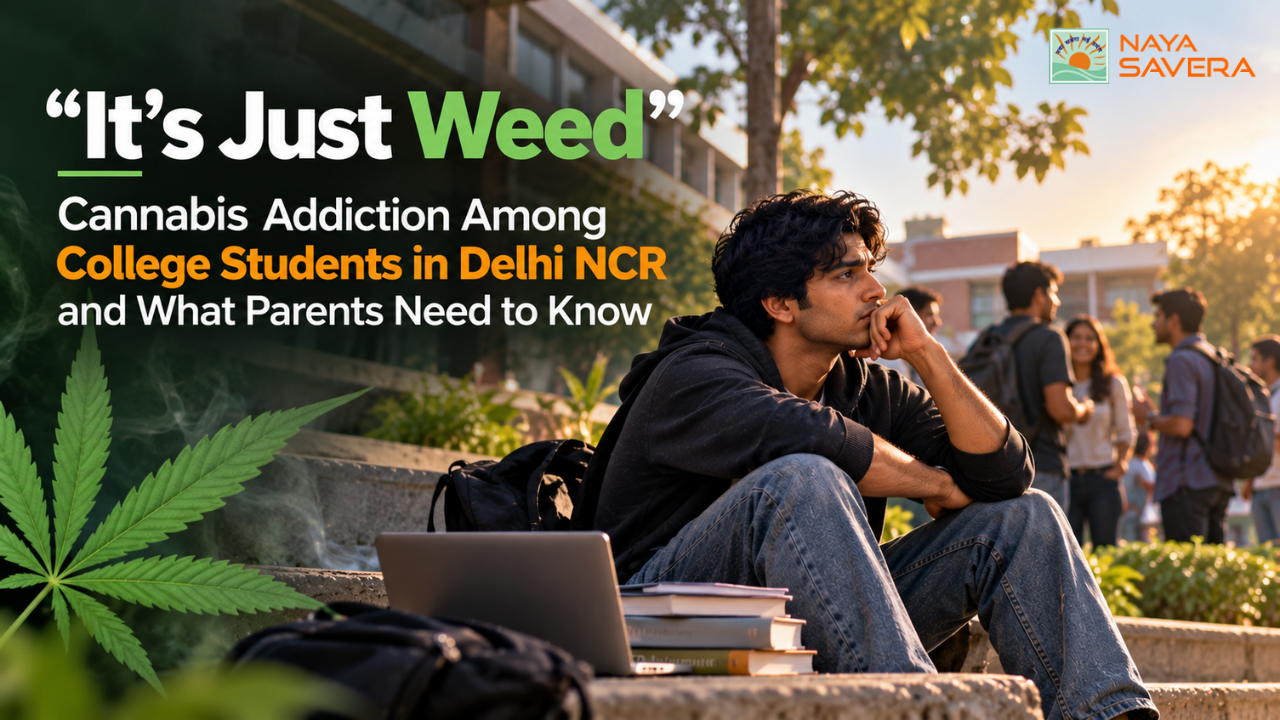

Ask a second year student in a North Campus hostel, a PG in Greater Noida, or a flat near a private university in Gurugram whether anyone they know uses drugs, and most will say no. Ask whether anyone smokes weed, and the same students will laugh. In their world those are two different questions. Cannabis is not a drug, it is a Friday night, a study break, a way to sleep, something their favourite musicians talk about openly and something that is apparently legal in half the countries they follow on Instagram.
That gap between how students see cannabis and how it actually behaves is where a quiet, growing problem lives. This guide is for parents and families in Delhi NCR who have heard the phrase “it’s just weed” and are not sure whether to worry. The short answer is that for most occasional users it stays occasional, and for a meaningful minority it does not, and the ones it does not stay occasional for are disproportionately young people who started in their teens and are using every day by the second year of college.
This Is Not the Cannabis of the Previous Generation
Parents who remember ganja as a weak, rural thing are working from an outdated picture. The product circulating on and around campuses today is a different substance in practice.
Potency has risen sharply. The THC content, which is the chemical that produces the high and drives dependency, is several times higher in modern cannabis than in what was common twenty or thirty years ago. Charas and hash, which are concentrated resin, are stronger still, and they are the most common form around Delhi NCR campuses.
Delivery has changed. Vape cartridges containing THC oil are now sold through the same informal networks that supply nicotine vapes to teenagers, and they carry none of the smell that once made cannabis easy to detect. We covered the vape supply chain in our piece on teen vaping in Delhi NCR; the devices are identical, only the cartridge changes.
Access has changed too. A student no longer needs to know a dealer. Instagram accounts, Telegram groups and delivery boys on scooters handle it, often within thirty minutes, at prices lower than a night out.
The Legal Reality in India
Students frequently believe cannabis is legal or close to it. It is not. Under the NDPS Act, ganja (the flowering tops) and charas (resin) are illegal to possess, buy or sell anywhere in India. Possession of even small quantities can mean arrest, a police record and in some cases jail time, and arrests near campuses in Delhi and Noida are routine. The only exception is bhang, made from leaves and seeds, which is tolerated in some states under licence. That exception has become the loophole in every student’s argument, but it does not cover the charas in their pocket. This is not legal advice; it is the reason a cannabis habit can end a student’s career before addiction does.
Is Cannabis Actually Addictive?
Yes. The medical term is cannabis use disorder, and it is recognised by every major psychiatric body. Public health estimates from the US, where the data is most complete, suggest that roughly one in ten people who use cannabis will develop a dependency, and among those who begin in their teens the figure rises to about one in six. With higher potency products, those numbers are likely to be conservative.
Weed addiction does not look like heroin addiction, which is exactly why it gets missed. There is no dramatic cannabis withdrawal, no collapse, no visible physical ruin. What there is: irritability, anxiety, poor sleep and loss of appetite when the person stops, a steady increase in how often and how much they use, failed attempts to cut down, and a life that slowly reorganises itself around the next session. Students describe needing it to sleep, needing it to eat, needing it to feel normal before a social event. That is dependency by any definition.
What It Does to a Student Specifically
The timing is what makes this particularly costly. The years between 17 and 25 are when the brain is finishing its development, especially the regions responsible for memory, motivation and judgement. Cannabis acts directly on those systems.
Memory and learning suffer first. Daily cannabis use consistently leads to worse performance on tasks that require holding and processing information, which is the core activity of a degree. The effect persists for days after each use, so a student who smokes four nights a week is effectively never at full capacity.
Motivation erodes quietly. Clinicians call it amotivational syndrome: the slow loss of drive that turns an ambitious first year into a fourth year who has stopped attending, stopped applying for internships and cannot explain why. Families often mistake this for laziness or depression. Sometimes it is the cannabis.
Anxiety and paranoia are common, especially with high potency products. The student who started smoking to relax ends up anxious when they are not high, which locks the cycle in place.
The most serious risk is psychiatric. Cannabis induced psychosis, with hallucinations, paranoid beliefs and disordered thinking, is a real and documented outcome, particularly in young people with a family history of mental illness and particularly with heavy use of high THC products. Some of these episodes resolve when use stops. Some do not. We see young men in their early twenties whose first psychiatric admission began with “just weed.”
Finally, cannabis is the most common doorway to the party drug market. The same supplier who delivers charas offers MDMA, LSD and whatever is new this season, and a student already comfortable buying one illegal substance is far easier to sell another. Our piece on synthetic drugs in Delhi’s nightlife describes where that road tends to lead.
How It Spreads on Campus
Hostels and PGs are the engine. A shared room, a terrace, a group that smokes after dinner, and within a semester the habit is part of the social fabric. Refusing means sitting out the evening, and for an 18 year old away from home for the first time, that is a high price.
Exam stress is the accelerator. The study break joint becomes the only way to switch off during a stretch of back to back tests. We described the pressure cooker around coaching hubs in our post on de-addiction support in Old Rajender Nagar, and the same dynamic runs through every university campus in NCR.
The normalisation is relentless. Music, comedy, films and social media present cannabis as harmless at best and aspirational at worst. A student who has absorbed years of that messaging genuinely believes a parent’s concern is ignorance.
Warning Signs for Parents of Students Living Away From Home
You will not smell it on a child who lives in a hostel. You have to read the signs of cannabis use in students differently.
Red, glassy eyes on video calls and an unusual reliance on eye drops. A new obsession with mouth freshener, perfume or incense. Sleep that has flipped, awake all night and asleep through lectures. Grades sliding with no explanation the student can give. Money requests that have increased without a clear reason. Withdrawal from family calls, shorter answers, irritability when questioned. Laughing fits or, conversely, flashes of paranoia and suspicion that were never part of their personality. Rolling papers, small grinders, lighters in a non smoker’s bag. And the one that matters most: a visible loss of interest in the things they used to care about, whether that was sport, a hobby, friends from school or their own future.
Any three of these together are a conversation, not an accusation.
Why “It’s Just Weed” Delays Help on Both Sides
The phrase does damage in two directions. The student uses it to dismiss the family’s concern and their own doubts. The parents, often privately relieved it is “not hard drugs,” use it to postpone action. Both sides agree to wait, and the dependency has the one thing it needs, which is time.
Treat it instead the way you would treat any substance dependency in a young adult: with a calm assessment of how much, how often and what it is costing. Occasional use at parties is one conversation. Daily use, use before class, use to sleep, or any sign of anxiety or paranoia is a different conversation, and that one belongs with a professional.
What Parents Should Actually Do
Start with a private conversation, not a confrontation in front of relatives. Name what you have noticed. Ask rather than accuse. Expect denial the first time and do not let it end the discussion.
Find out the actual level of use. The answers to three questions tell you most of what you need: how many days a week, whether they use alone, and whether they have tried to stop. Daily, alone and failed attempts are the three markers of dependency.
Get a proper drug addiction assessment. A counsellor or psychiatrist who works with young adults can distinguish between a habit that needs structure and support and a dependency that needs treatment. If there are any signs of psychosis, paranoia or severe anxiety, this is urgent, not optional.
Understand the treatment options. Many students respond to structured outpatient addiction counselling with family involvement. Heavy daily users, those with psychiatric symptoms, and those who have failed to stop on their own usually need a residential programme, where the environment is removed and the work can be done properly. Our guide to what happens in the first 30 days at a rehab centre explains what that involves.
Protect their future while you act. A medical leave is recoverable. A police case is not. Students and families should understand that getting help quietly and early is also the only reliable way to avoid the legal consequences that catch up with regular users.
How Naya Savera Helps Students and Young Adults
Naya Savera is a non-profit de addiction centre and nasha mukti kendra with facilities in Delhi, Noida and Himachal Pradesh. Our cannabis addiction treatment for students and young adults begins with a full assessment that includes psychiatric screening, because cannabis related anxiety and psychosis need to be identified and treated alongside the dependency itself. From there, treatment is built around the realities of a young person’s life: structured counselling, peer groups of a similar age, family sessions that help parents move from alarm to support, and a plan for returning to college with the habits and the social circle that recovery depends on. Every case is confidential. A student’s future, academic and legal, is treated as part of what we are protecting. As a rehabilitation centre working with families since 2008, we have seen that the students who do best are the ones whose families acted while it was still “just weed.”
Frequently Asked Questions
Is cannabis addictive, or is that an exaggeration?
It is addictive. Cannabis use disorder is a recognised medical diagnosis. Roughly one in ten users develops a dependency, rising to about one in six among those who start in their teens, and modern high potency products make those figures conservative.
Is weed legal in India?
No. Ganja and charas are illegal under the NDPS Act. Bhang, made from leaves and seeds, is tolerated under licence in some states, but that exception does not cover the cannabis students actually use.
What are the signs my college going child is using cannabis?
Red glassy eyes, heavy use of eye drops and mouth freshener, reversed sleep, falling grades, increased money requests, irritability, withdrawal from family contact, and a general loss of motivation and interest in things they used to care about.
Can cannabis cause mental health problems?
Yes. Heavy use of high THC products, especially in young people, is linked to anxiety, paranoia and cannabis induced psychosis. Any sign of hallucinations, paranoid beliefs or disordered thinking needs urgent professional assessment.
Does a student need residential rehab for cannabis?
Not always. Occasional or early stage use often responds to structured outpatient counselling with family involvement. Daily use, psychiatric symptoms, or repeated failed attempts to stop usually need a residential programme.
If you have been telling yourself it is just weed and something in this article made you uncomfortable, that discomfort is worth acting on. Reach out to Naya Savera for a confidential conversation about where your child actually stands and what the right next step is.
Leave a Comment