

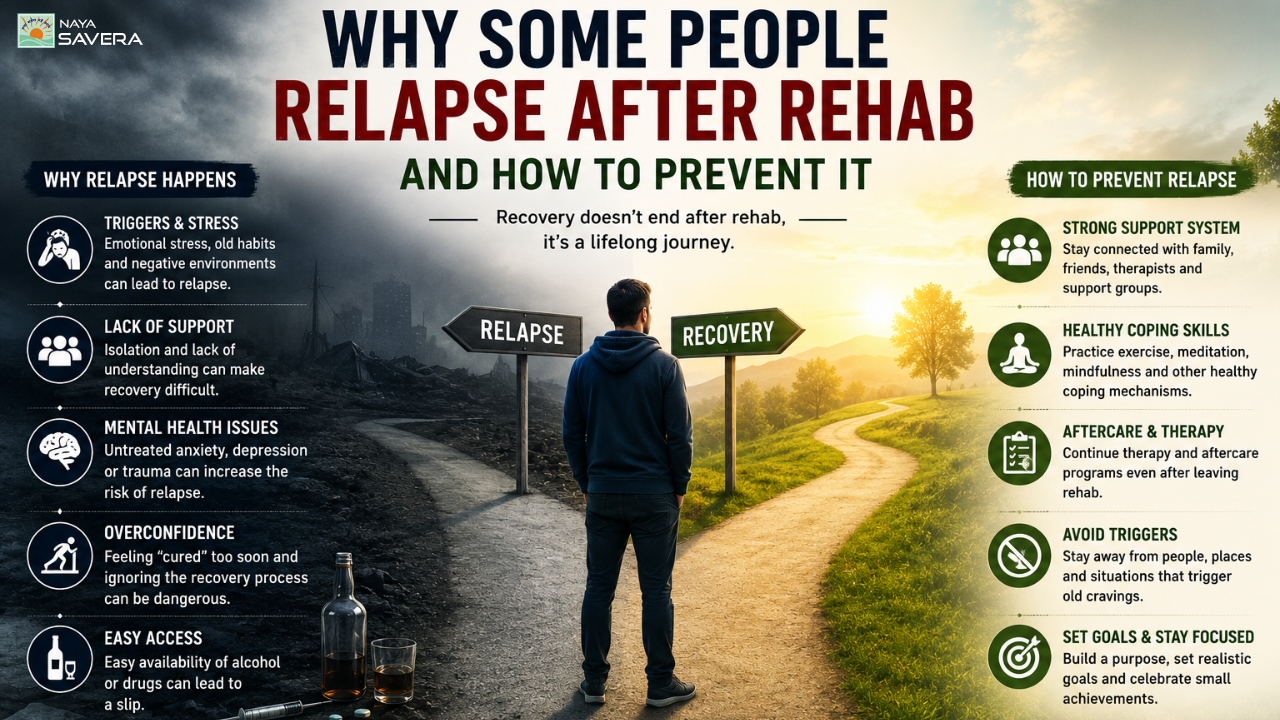

Completing a rehabilitation program is a major achievement, but recovery does not end when someone leaves a rehab centre. In reality, the period after treatment is often one of the most challenging phases of the recovery journey. Many individuals successfully complete detoxification and therapy, only to find themselves struggling with cravings, emotional triggers, and old habits once they return to everyday life.
This is where relapse becomes a concern.
Relapse does not mean failure. It does not mean treatment did not work. Instead, it often indicates that additional support, coping strategies, or lifestyle changes are needed. Understanding why relapse happens and how it can be prevented is essential for long-term recovery.
At Naya Savera, a trusted rehab center in Delhi and rehab center in Noida, we believe that lasting recovery is possible when individuals are equipped with the right tools, support systems, and aftercare programs.
What Is Relapse?
Relapse occurs when a person returns to alcohol or drug use after a period of sobriety. Many people assume relapse happens suddenly, but recovery experts know that relapse is usually a gradual process.
It often begins long before substance use resumes. Emotional stress, unhealthy thinking patterns, isolation, and exposure to triggers can slowly weaken a person’s recovery foundation.
Research shows that addiction is a chronic condition, similar in some ways to diabetes or hypertension. Just as other health conditions require ongoing management, addiction recovery requires continuous attention and support.
This is why professional drug rehab in Delhi and alcohol rehab in Noida programs emphasize relapse prevention as a core part of treatment.
Why Do People Relapse After Rehab?
Returning to the Same Environment
One of the most common reasons for relapse is returning to an environment associated with past substance use.
Many individuals leave rehabilitation feeling motivated and confident. However, when they return to the same social circles, neighbourhoods, or stressful situations that contributed to addiction, old habits can quickly resurface.
Environmental triggers may include:
- Friends who still use substances
- Places associated with drinking or drug use
- Family conflicts
- Work-related stress
- Unhealthy routines
A professional rehab center in Delhi often helps patients identify these triggers before discharge so they can prepare strategies to manage them.
Unrealistic Expectations About Recovery
Many people believe that completing rehab will eliminate all cravings and emotional struggles immediately.
In reality, recovery is a long-term process. Stress, anxiety, sadness, and temptation do not disappear overnight.
When individuals expect life to become instantly perfect after treatment, disappointment can create emotional vulnerability. This frustration sometimes leads people back to alcohol or drugs as a coping mechanism.
Understanding that recovery involves continuous growth helps individuals maintain realistic expectations and stay committed to sobriety.
Lack of Strong Support Systems
Recovery becomes significantly more difficult when someone feels isolated.
Research consistently shows that strong social support is one of the most important factors in long-term sobriety. Individuals who maintain healthy relationships with family, counsellors, sponsors, and support groups tend to experience better recovery outcomes.
Without support, stress and emotional challenges become harder to manage.
This is why leading rehab centers in Noida and Delhi encourage family involvement and ongoing aftercare programs.
Untreated Mental Health Conditions
Many individuals struggling with addiction also face underlying mental health challenges such as:
- Anxiety disorders
- Depression
- Trauma
- PTSD
- Chronic stress
- Low self-esteem
If these issues remain untreated, the risk of relapse increases significantly.
Alcohol or drugs often become temporary solutions for emotional pain. Unless mental health is addressed alongside addiction treatment, old coping patterns may return.
Modern alcohol rehab in Delhi programs focus on both addiction recovery and psychological healing because the two are closely connected.
Overconfidence After Recovery
While confidence is important, overconfidence can sometimes become a risk factor.
Some individuals begin to believe they no longer need support meetings, counselling sessions, or relapse prevention strategies because they feel fully recovered.
This mindset can lead to:
- Ignoring warning signs
- Returning to risky situations
- Stopping therapy
- Reconnecting with unhealthy influences
Recovery requires ongoing commitment, even after months or years of sobriety.
Common Warning Signs of Relapse
Relapse often begins emotionally before substance use occurs.
Some early warning signs include:
Emotional Withdrawal
People may start isolating themselves from family, friends, or recovery groups.
Increased Stress
Unmanaged stress is one of the biggest relapse triggers.
Romanticizing Past Substance Use
Thinking only about the positive experiences associated with alcohol or drugs while ignoring the negative consequences can be dangerous.
Skipping Recovery Activities
Missing therapy sessions, support meetings, or self-care routines can weaken recovery foundations.
Mood Swings and Irritability
Sudden emotional changes often indicate that someone is struggling internally.
Recognizing these warning signs early allows intervention before a full relapse occurs.
How to Prevent Relapse
Build a Structured Daily Routine
One of the most effective ways to prevent relapse is maintaining structure.
A healthy routine helps reduce boredom, improve mental health, and create stability.
Successful recovery often includes:
- Regular sleep schedules
- Healthy eating habits
- Physical exercise
- Work-life balance
- Relaxation techniques
A structured lifestyle leaves less room for unhealthy habits to return.
Continue Therapy and Counselling
Recovery should not stop when rehab ends.
Ongoing counselling helps individuals:
- Process emotions
- Manage stress
- Address triggers
- Strengthen coping skills
Many people who maintain long-term sobriety continue attending therapy sessions for months or even years after treatment.
This continued support is often recommended by professional drug rehab in Noida and Delhi recovery programs.
Develop Healthy Coping Mechanisms
One major goal of rehabilitation is teaching healthier ways to handle life’s challenges.
Instead of turning to substances, individuals can learn to cope through:
- Exercise
- Meditation
- Journaling
- Creative hobbies
- Mindfulness practices
- Social support
Healthy coping strategies reduce emotional vulnerability and strengthen recovery.
Avoid High-Risk Situations
Recovery often requires making difficult but necessary lifestyle changes.
This may include:
- Avoiding drinking environments
- Limiting contact with former substance-using friends
- Staying away from triggering locations
- Setting healthy boundaries
Although these changes can feel challenging initially, they significantly reduce relapse risk.
Stay Connected to Recovery Communities
Support groups create accountability and encouragement.
Being surrounded by others who understand recovery challenges helps individuals feel less alone.
Whether through therapy groups, community meetings, or rehabilitation aftercare programs, ongoing connection remains one of the strongest protective factors against relapse.
The Importance of Aftercare Programs
One reason high-quality rehabilitation centres focus heavily on aftercare is because recovery continues long after treatment ends.
Effective aftercare programs may include:
- Follow-up counselling
- Family therapy
- Recovery coaching
- Support groups
- Relapse prevention planning
- Mental wellness monitoring
At Naya Savera, our aftercare approach helps individuals maintain motivation, identify challenges early, and continue building healthy lifestyles after rehabilitation.
Relapse Is Not Failure
Perhaps the most important message for individuals and families to understand is this:
Relapse does not mean failure.
If relapse occurs, it should be viewed as a signal that additional support is needed rather than a reason to give up.
Many people who achieve long-term sobriety experience setbacks during recovery. What matters most is seeking help quickly and returning to treatment before addiction regains control.
Recovery is a journey, not a single event.
Conclusion
Relapse remains one of the biggest challenges in addiction recovery, but it is not inevitable. Understanding the causes of relapse, recognizing warning signs, and building strong support systems can dramatically improve long-term success.
Professional guidance, ongoing counselling, healthy routines, and family support all play vital roles in maintaining sobriety.
If you or a loved one is struggling with addiction recovery, seeking support from a trusted rehab center in Delhi, rehab center in Noida, alcohol rehab in Delhi, or drug rehab in Noida can make all the difference.
At Naya Savera, we believe recovery is not about perfection, it is about progress, resilience, and the courage to keep moving forward.
Leave a Comment